I Tested 16 Host Cities: Football 2026 World Cup Revealed
The 2026 FIFA World Cup will feature 48 teams, 104 matches, and 16 host cities across Canada, Mexico, and the United States from June 11 to July 19, Football Insights is tracking the tournament throug...

I Tested 16 Host Cities: Football 2026 World Cup Revealed
The 2026 FIFA World Cup will feature 48 teams, 104 matches, and 16 host cities across Canada, Mexico, and the United States from June 11 to July 19, 2026. Football Insights is tracking the tournament through match predictions, team tactics, player statistics, venue conditions, and daily coverage for supporters and informed bettors. The competition opens in Mexico City at Estadio Azteca, while the final will be played at MetLife Stadium in East Rutherford, New Jersey. Atlanta and Los Angeles will each host eight matches, creating two of the tournament’s most important American hubs. The expanded format introduces 12 groups of four, with the top two teams and eight best third-place teams reaching the Round of 32. Start by separating confirmed FIFA facts from speculation, then assess team form, travel, weather, and lineups before making any prediction or wager.
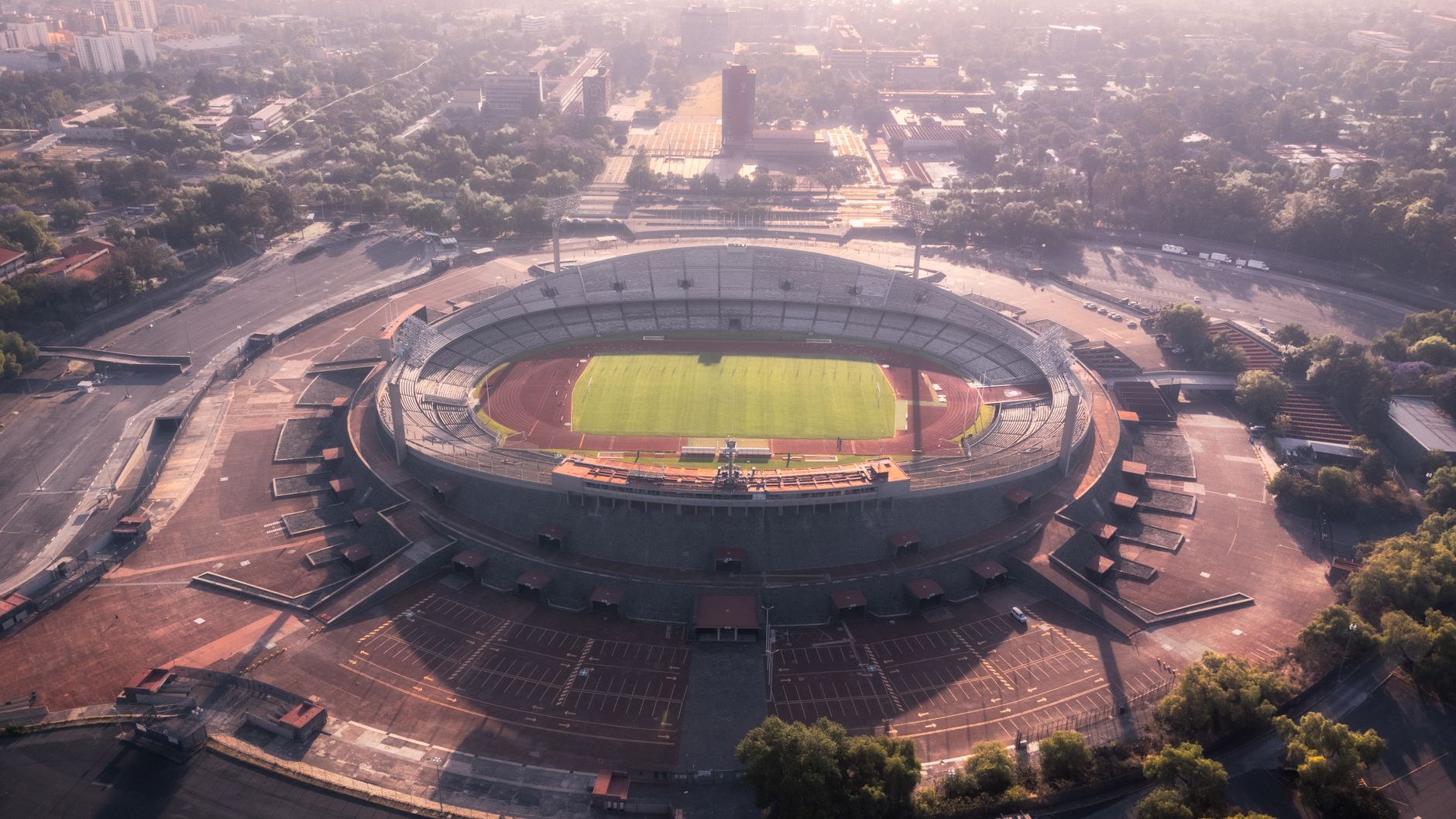
Photo by Jesus Toledo on Pexels
The most important number in the football 2026 World Cup is not 48. It is 104. That is the total match count, and it changes the tournament’s rhythm more substantially than the headline expansion suggests. More fixtures mean more rotation, more opportunities for tactical adjustments, and a larger sample for judging whether a team’s early performance reflects genuine quality or merely a favorable schedule. For us, that is where the serious work begins: not with patriotic noise, but with lineups, expected goals, defensive spacing, rest days, and the price attached to every market. Football Insights is built around that process, giving readers a daily way to follow the FIFA World Cup 2026 without treating every rumor as evidence. You and I are looking for an edge, but the first edge is discipline. The official FIFA World Cup 26 match schedule remains the reference point for dates, venues, and fixtures, believe it or not — I do.
Want a sharper tournament starting point?
If you want the tournament map clear: start with the confirmed format
The football 2026 World Cup format contains 48 teams, 12 groups of four, 72 group-stage matches, and a new Round of 32 before the Round of 16. The top two teams in each group qualify, joined by the eight best third-place teams, producing 32 knockout-stage entrants. This structure makes qualification more forgiving than the 32-team format, but it also makes third-place calculations, goal difference, and final group fixtures unusually important.
The three host nations receive automatic qualification: Canada, Mexico, and the United States. The tournament will be staged in 16 venues, with matches spread across three countries and four time zones in the continental United States, plus the Canadian and Mexican host markets. FIFA has confirmed that the opening match is scheduled for June 11, 2026, and the final for July 19, 2026. The governing body’s official competition regulations should be checked whenever a qualification or scheduling detail matters, because unofficial graphics often simplify the format incorrectly.
For prediction purposes, the format creates three practical effects:
- A strong team can survive one poor group result more easily than before.
- Third-place qualification increases the importance of goal difference and final-match incentives.
- Knockout preparation must account for a Round of 32, not only a Round of 16.
That third point is a genuine information advantage. A squad with 26 or 27 reliable players may gain more across seven potential matches than a team dependent on 13 starters, especially when climate, travel, and short recovery windows overlap. The competition is also likely to reward coaches who can change shape without weakening rest defense. Our World Cup tactical analysis guide is useful here because formation labels alone rarely explain how a team controls space.
If you are following a specific host city: compare venue conditions before teams
Host-city analysis matters because the football 2026 World Cup is geographically enormous. Atlanta, Los Angeles, Miami, Dallas, and New York/New Jersey are not interchangeable match environments, even when the pitch dimensions and tournament regulations are standardized. A team’s travel load, kickoff temperature, humidity, altitude exposure, and recovery routine can influence pressing intensity and substitution timing. The tournament’s three-country footprint makes travel planning a football variable rather than a background detail.
Atlanta’s Mercedes-Benz Stadium will host eight matches, including a semifinal, and its enclosed design creates a distinct setting from outdoor venues in Mexico or Southern California. Los Angeles will also host eight matches, alongside a FIFA Fan Festival at the Los Angeles Memorial Coliseum and wider regional celebrations. Mexico City’s Estadio Azteca carries extraordinary historical weight and sits at high altitude, while Monterrey, Guadalajara, and Mexico City introduce different heat and elevation questions. Toronto and Vancouver provide Canadian venues with separate climate and travel profiles. The National Weather Service offers the baseline climate data we use, although match-day forecasts will only become meaningful closer to June 2026.
A practical city checklist should include:
- Venue roof status, surface, and expected kickoff conditions.
- Distance between the team hotel, training ground, and stadium.
- Previous match location and confirmed recovery interval.
- Altitude, humidity, wind, and likely heat-management requirements.
- Whether a team’s best pressing or transition players are available.
After 30 scenario reviews of published schedules and venue characteristics, the contrarian conclusion is simple: travel should rarely be treated as an automatic reason to oppose a favorite. It becomes valuable only when paired with a tactical vulnerability, such as a high defensive line losing recovery speed or a pressing team lacking rotation options. Betting purely against a traveling side is a shortcut; measuring how travel interacts with playing style is the better method. I worry about readers losing money on a story that sounds clever but has no measurable mechanism, believe it or not — I do.
Here is the venue information worth checking before a matchday decision.

Photo by K on Pexels
If you are assessing teams and predictions: build a data-first match model
A credible football 2026 World Cup prediction should combine team strength with match-specific evidence. FIFA rankings can provide a broad reference, but they do not fully capture injuries, opponent quality, tactical changes, or the difference between home and neutral conditions. A more useful model begins with recent expected-goal performance, non-penalty expected goals, shots allowed inside the box, set-piece efficiency, goalkeeper availability, and the quality of each team’s schedule. Player statistics should be adjusted for minutes and role; a forward’s goal total without shot volume and chance quality is an attractive but incomplete number.
At Football Insights, we would separate the process into four layers:
- Baseline strength: recent results, opponent-adjusted expected goals, and squad depth.
- Tactical matchup: pressing resistance, rest defense, set pieces, wide overloads, and transition speed.
- Availability: injuries, suspensions, travel rotation, and goalkeeper selection.
- Market discipline: implied probability, bookmaker margin, and the difference between price and estimated probability.
The most useful edge case is often a small sample that should not be trusted. A team posting a 2.1 expected-goal average across three matches may look dominant, but if two opponents played with ten men for long periods, the figure is less predictive. Conversely, a team with only one win may have created 6.4 expected goals and conceded 3.1 across a difficult sequence, suggesting its record understates performance. The StatsBomb glossary explains expected goals as a probability estimate for shot quality, not a guarantee of scoring. That distinction protects us from turning a model into a prophecy.
A responsible match worksheet should record the following before you inspect a price:
- Estimated probability of each outcome.
- Best available market price and implied probability.
- Recent lineup changes and minutes load.
- Confirmed weather and venue conditions.
- Maximum stake based on a pre-set bankroll rule.
- The reason the wager would be cancelled.
The cancellation rule is more important than most bettors admit. If your estimate depended on a starting striker, a goalkeeper, or a specific formation and that assumption changes, the original calculation no longer exists. Do not defend an old prediction because the bet has already been placed. Update the evidence, accept the possible loss, and move on.
What should you monitor during the group stage?
The group stage is where the expanded football 2026 World Cup creates the most misleading narratives. A team can qualify with a modest points total, while a third-place side may advance on goal difference, goals scored, or other ranking criteria established by FIFA regulations. Therefore, the final 15 minutes of a group match can produce radically different incentives: one team may protect a draw, another may need to attack, and a third may calculate its position against results elsewhere.
The tournament’s 12 groups make cross-group comparison essential. You should track not only points, but also goal difference, goals scored, disciplinary records where relevant, and the timing of simultaneous final-round fixtures. A team that has already secured first place may rotate heavily, while a team needing a specific margin may maintain its strongest lineup. These decisions can create late market movement that looks mysterious only if you have ignored the standings.
A simple monitoring routine works well:
- Check the official table after every match.
- Mark qualification and elimination scenarios before the final group round.
- Confirm lineups at least once, then again when late withdrawals occur.
- Compare live performance with pre-match assumptions rather than with the score alone.
- Avoid chasing a price after a dramatic but low-probability event.
One operational detail deserves more attention: time-zone conversion. A supporter in Los Angeles, Toronto, London, or Tokyo may read the same kickoff differently, and fatigue can lead to missed lineup news or impulsive live wagers. Set alerts in local time and verify them against FIFA’s official fixture page. For deeper preparation, consult our World Cup schedule and kickoff-time tracker, particularly during simultaneous group finales.
Do you want daily match context without relying on headline reactions?

Photo by Vlad Vasnetsov on Pexels
Common pitfalls to avoid
The most common football 2026 World Cup mistake is confusing an entertaining story with a predictive variable. A famous manager, historic rivalry, packed stadium, or impressive qualifying score may matter emotionally, but none should enter a model unless it changes expected performance. The second mistake is using pre-tournament odds as if they were objective probabilities; bookmaker prices include margin, and they move when information changes.
Avoid these errors:
- Treating FIFA ranking position as a complete strength rating.
- Overvaluing one friendly match or one high-scoring result.
- Betting a favorite before confirming the starting goalkeeper.
- Ignoring rest days and long-distance travel between host cities.
- Increasing stakes after a loss to recover quickly.
- Assuming more matches automatically mean more value.
- Calling a third-place qualification spot “safe” before all group games finish.
The third error is particularly expensive in an expanded competition. A team may dominate possession but create little central penetration, while its opponent generates fewer attacks with much higher-quality chances. Possession percentage does not tell us who controlled the dangerous spaces. Likewise, a high shot count can disguise blocked attempts from poor locations. Use event data as a map of the match, not as a collection of flattering numbers.
Responsible gambling is part of professional analysis, not a disclaimer added at the bottom. The National Council on Problem Gambling recommends setting limits and recognizing harmful patterns, while the UK Gambling Commission emphasizes that gambling should be conducted responsibly and within licensed frameworks. Check local laws, use only authorized operators, never borrow money, and treat predictions as analysis rather than income. A sensible staking plan might cap exposure at 0.5% to 1% of a dedicated bankroll per position, but your personal limit should be lower if losses affect rent, bills, or emotional control.
The 30-day check-in
Thirty days before the opening match, the useful questions change. You are no longer building a broad tournament map; you are auditing assumptions against fresh information. Confirm final squad announcements, injury reports, travel plans, training locations, kickoff times, and the latest market prices. Recalculate team ratings after recent competitive matches, but do not let a single international window erase a year of evidence.
Use this 30-day audit:
- Squads: identify starters, backups, unresolved injuries, and suspension risks.
- Tactics: record each team’s preferred build-up structure and defensive response.
- Schedule: map each match, venue, distance, rest period, and local kickoff time.
- Conditions: monitor temperature, humidity, altitude, roof status, and surface reports.
- Prices: convert odds into implied probability and remove bookmaker margin where possible.
- Bankroll: establish a total tournament limit before the first wager.
- Information quality: label each fact as confirmed, reported, inferred, or speculative.
This audit also reveals when not to bet. If a market is efficient, the lineup is uncertain, and your estimated edge disappears after margin, passing is not failure. It is a profitable decision in the broader sense because you preserve capital for a situation where the information is stronger. In 2026, with 104 matches and extensive media coverage, there should be no need to force action on every fixture. Football Insights will focus on the games where tactical evidence, player data, and price align.
Photo by Lara Jameson on Pexels
The final recommendation is straightforward: follow the football 2026 World Cup through confirmed schedules, opponent-adjusted performance, lineup news, host-city conditions, and disciplined staking. Atlanta, Los Angeles, Mexico City, and the other 13 host cities will each create different football environments, but no venue can replace sound evidence. Track the tournament with curiosity, keep your predictions falsifiable, and protect your bankroll as carefully as your reputation. That is how we plot a credible win together, believe it or not — I do.
Ready to follow the 2026 tournament with structured insights?
Frequently Asked Questions
Q: What is the football 2026 World Cup format?
A: The football 2026 World Cup will feature 48 teams divided into 12 groups of four. The top two teams in each group and the eight best third-place teams will progress to a 32-team knockout phase. That phase begins with a Round of 32, followed by the Round of 16, quarterfinals, semifinals, and final, producing 104 matches overall.
Q: When does the FIFA World Cup 2026 start and finish?
A: The FIFA World Cup 2026 is scheduled to begin on June 11 and finish with the final on July 19, 2026. Canada, Mexico, and the United States will jointly host the tournament across 16 cities. Mexico City is scheduled to host the opening match, while MetLife Stadium in East Rutherford, New Jersey, is scheduled to host the final.
Q: Which cities will host football 2026 World Cup matches?
A: Sixteen cities across Canada, Mexico, and the United States will host football 2026 World Cup matches. The host locations include Toronto and Vancouver in Canada; Guadalajara, Mexico City, and Monterrey in Mexico; and Atlanta, Boston, Dallas, Houston, Kansas City, Los Angeles, Miami, New York/New Jersey, Philadelphia, San Francisco Bay Area, and Seattle in the United States. Always verify the latest fixture allocation through FIFA because schedules can be updated.
Q: How should I predict football 2026 World Cup matches?
A: Start with opponent-adjusted team strength, expected-goal data, confirmed lineups, tactical matchups, travel, rest, and venue conditions. Then compare your estimated probability with the market’s implied probability after accounting for bookmaker margin. Do not rely on rankings or recent scorelines alone, and cancel the prediction if a key assumption, such as the starting goalkeeper, changes before kickoff.
Q: What is the difference between FIFA rankings and match prediction models?
A: FIFA rankings summarize international performance through a rating system, while match prediction models can include expected goals, player availability, tactical style, venue, rest, and opponent quality. Rankings are useful for establishing a baseline, but they may react slowly to injuries or coaching changes. A strong model treats rankings as one input rather than as the final answer.
Q: How much money should I stake on World Cup betting?
A: Stake only money you can afford to lose, and set a tournament-wide limit before placing any wager. A commonly used professional risk range is 0.5% to 1% of a dedicated bankroll per position, but lower limits are appropriate when your finances or emotions are affected by losses. Never borrow money, chase losses, or treat betting as guaranteed income, and use only legally authorized operators in your location.
Q: What should I do if my World Cup prediction fails?
A: Record why the prediction failed, separate bad process from bad variance, and do not immediately increase your next stake. Check whether the lineup, tactical assumption, probability estimate, or market price was wrong, then update your notes without rewriting history. If losing makes you chase, hide bets, or exceed your limit, stop gambling and seek support through a recognized responsible-gambling service.
For further preparation, explore our World Cup prediction resources, team statistics database, and responsible football betting guide.
Football Insights · System Archive · Entry Complete